
Raising Children as People, Not Boys or Girls
Updated: Mar 28
There’s a lot of parenting commentary right now aimed at “boy mums” — advice about how boys are wired, how they learn, how they communicate, and how they should be handled.
I read these pieces thoughtfully, but with care.
I didn’t raise my children according to a gender script. I raised them as individuals with distinct needs. Same expectations. Same values. Same rules. Different delivery.
Because some children are naturally verbal. Some are quiet. Some are physical. Some are affectionate. Some are reserved. Some process emotions externally. Others do it internally. Those differences matter far more than gender ever will.
I’ve never thought in terms of boys are like this or girls are like that. Actually, I did but I wanted to change the status quo because I do not agree with it. I believe boys should learn to be kind from the start and girls should learn to be independent from the start. So I raised children. Not boys and girls. Let them be themselves as much as possible unless they were horrible then I intervene.
I’ve always thought: this child in front of me is like this.
In our family, the boys tended to be quieter and less confrontational. They didn’t talk back. They asked for reassurance more directly. Some of them wanted affection and validation, and they asked for it openly. When they did, I responded — with hugs, reassurance, and presence.
The girls, on the other hand, were feisty. They challenged assumptions. They pushed back confidently and questioned authority, including mine. And I was proud of that. I remember thinking, at least I know no one will abuse them and get away with it. They had strong voices, and they weren’t afraid to use them.
That meant parenting didn’t always look the same — not because of gender, but because of temperament.
I adjusted how I gave instructions. Some children struggled with multitasking, so I gave shorter, clearer guidance. I adjusted how I offered affection, because affection only works when it’s received. I adjusted how I held boundaries, because different personalities push in different ways. Not to be fair in appearance, but to be fair in impact.
I also taught them that they were responsible for one another.
“You are your brother’s keeper” wasn’t a phrase in our house — it was a standard. Looking out for each other wasn’t optional. Everyone was expected to notice when someone was struggling and step in where they could.
At the same time, I was very clear about certain lines.
The boys were taught that they should never hit a girl. Ever. That wasn’t negotiable. If it happened, the response was firmer. Not because girls are weak, but because strength carries responsibility.
They were also taught to carry things, to step forward, and not to let their sisters do heavy lifting. Not to prove anything, but to be considerate. To notice. To offer. To be gentlemen.
That didn’t mean the girls were incapable. It meant they didn’t need to prove capability by doing everything themselves.
These weren’t contradictions. They were values layered on top of individuality.
Gender-based parenting frameworks can be useful as loose context, but they fall apart when they replace observation. Children don’t need to be managed as categories. They need to be understood as people.
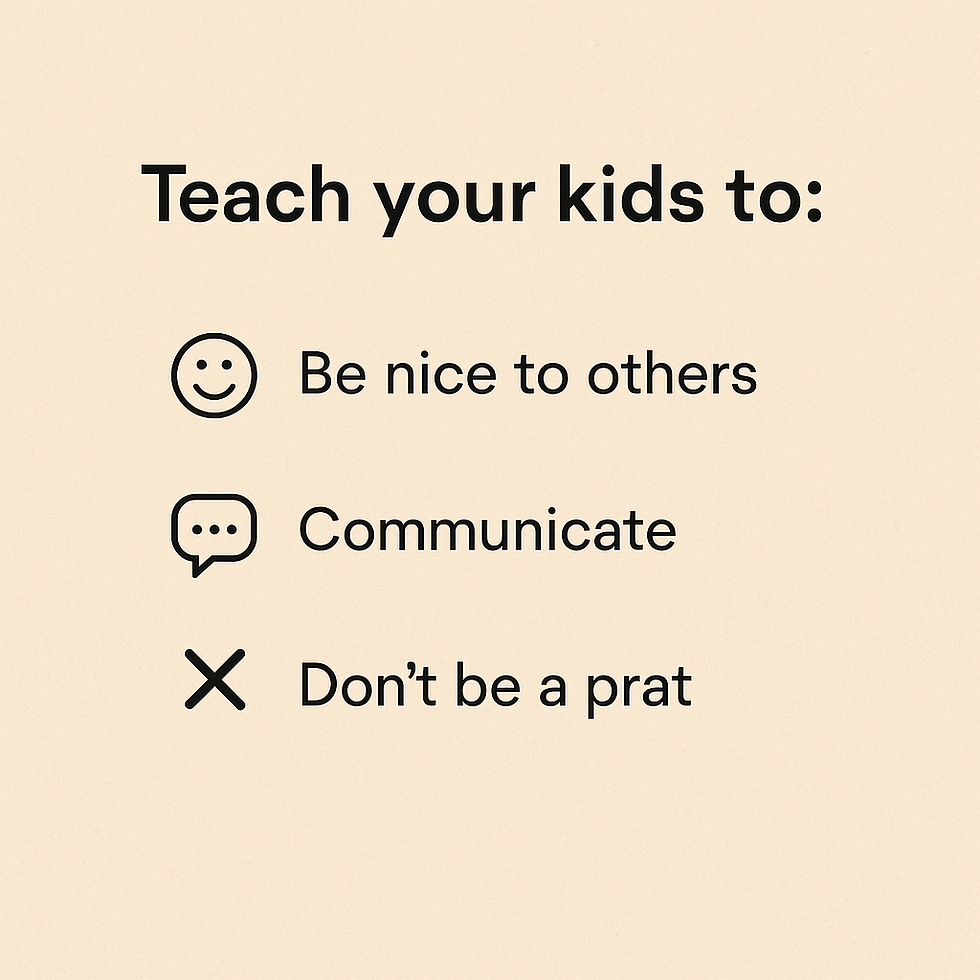
See, the point is…You don’t raise boys or girls. You raise individuals. And fairness isn’t sameness, it’s responsiveness.


Comments